




Larnaca is a convenient starting point for exploring Cyprus by car. The city is close to the island’s main motorway network, allowing travellers to reach beaches, traditional villages, historic attractions and other popular destinations without depending on fixed bus schedules.
A rental car is not essential for a short stay around Finikoudes or central Larnaca. However, it becomes much more useful if you plan to visit Ayia Napa, Protaras, Lefkara, Nicosia, Limassol or the Troodos Mountains.
Citeste si:


This guide explains the main Cyprus driving rules, parking conditions, airport pickup procedures and practical details to check before renting a car in Larnaca.
Is It Worth Renting a Car in Larnaca?
Many central Larnaca attractions can be reached on foot. Finikoudes promenade, Saint Lazarus Church, the marina and nearby restaurants are concentrated within a relatively small area.
A car is more useful for travellers staying outside the centre or planning several day trips. Public transport connects Larnaca with some popular destinations, but travelling by car provides greater flexibility and makes it easier to combine several places in one day.
A rental car may be particularly useful for visiting:
- Ayia Napa and Cape Greco
- Protaras and Fig Tree Bay
- Lefkara and nearby traditional villages
- Nicosia
- Limassol
- The Troodos Mountains
- Beaches and villages outside regular bus routes
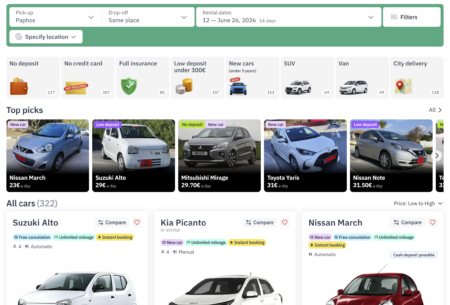
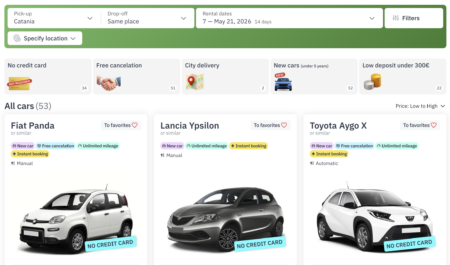
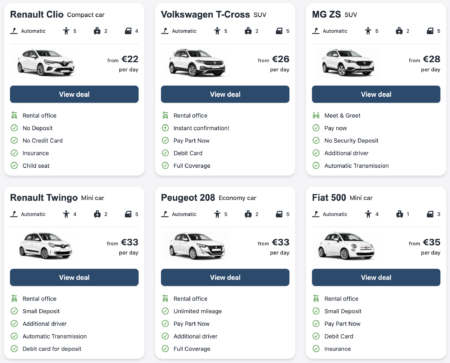
Travellers can compare available vehicles through Car Rental Larnaca No Deposit. Deposit, payment and insurance conditions vary between individual vehicles and local rental providers.
Driving on the Left in Cyprus
One of the most important things for international visitors to remember is that vehicles drive on the left-hand side of the road in Cyprus. The driver’s seat is normally on the right side of the vehicle.
Travellers arriving from countries where traffic moves on the right may need some time to adjust. Extra attention is particularly important at roundabouts, junctions and when leaving petrol stations or parking areas.
Helpful habits include:
- Keeping to the left after every turn
- Looking in both directions before entering a road
- Following lane arrows at roundabouts
- Avoiding distractions during the first journey
- Choosing an automatic car if this makes driving easier
Many rental vehicles in Cyprus have red registration plates, which can help other drivers recognise that the vehicle may be driven by a visitor.
Driving Licence Requirements
Visitors must carry a valid driving licence accepted in Cyprus. Depending on the country that issued the licence, an International Driving Permit may also be recommended or required.
Rental companies may apply their own rules regarding minimum driver age, maximum driver age and the number of years the licence has been held.
Drivers should normally carry:
- A valid original driving licence
- A passport or national identity card
- The rental agreement
- Vehicle and insurance documents supplied by the provider
The main driver’s name should match the booking details and the payment card where a card is required.
Speed Limits in Cyprus
Drivers should always follow the posted road signs. Standard limits depend on the road type and may be reduced near schools, residential areas, junctions and roadworks.
The maximum motorway speed limit for ordinary passenger cars is generally 100 km/h. Lower limits apply on urban and regional roads.
Speed cameras and police checks are used in Cyprus. Navigation applications may provide useful guidance, but drivers should rely on official road signs rather than assuming the same limit applies throughout a journey.
Basic Cyprus Driving Rules
Road rules in Cyprus are broadly similar to those in other European countries, with the main difference being left-hand traffic.
- Seat belts must be used by the driver and passengers.
- Handheld mobile phone use while driving is prohibited.
- Children must use an appropriate restraint where required.
- Drivers must follow traffic lights and road signs.
- Overtaking normally takes place on the right.
- Drivers should maintain a safe distance from the vehicle ahead.
Alcohol limits are stricter for novice and certain professional drivers. The safest approach is not to drink alcohol before driving.
Roundabouts in Larnaca
Roundabouts are common in Larnaca and throughout Cyprus. Traffic moves clockwise because vehicles drive on the left.
Drivers should select the correct lane before entering, give way where required and signal when leaving. Lane markings and signs may vary depending on the size and layout of the roundabout.
Visitors unfamiliar with left-hand traffic should approach slowly and avoid changing lanes suddenly. Missing an exit and continuing around the roundabout is safer than making a last-minute turn.
Driving in Central Larnaca
Driving in Larnaca is generally manageable, but central streets can become busy during weekends, holidays and the summer season.
Areas close to Finikoudes, the marina and popular restaurants may have heavier pedestrian traffic and limited street parking. Some streets are narrow or one-way, so following road signs is important even when using a navigation application.
If your accommodation is in the city centre, it may be easier to park the car and explore the central area on foot.
Parking in Larnaca
Parking options include street spaces, municipal car parks, private parking facilities and hotel parking. Conditions and fees vary by location.
Before leaving the vehicle, check:
- Whether the space is paid or free
- The permitted parking period
- Whether the space is reserved for residents
- Any restrictions shown on nearby signs
- Whether payment must be displayed or completed digitally
Avoid blocking entrances, pavements, loading areas or spaces reserved for people with disabilities. Incorrectly parked vehicles may receive a fine or be removed.
Travellers staying near Finikoudes or Mackenzie Beach should ask their accommodation whether private parking is included.
Collecting a Car at Larnaca Airport
Collecting a rental car after landing is convenient for travellers who want to continue directly to a hotel, apartment, villa or another part of Cyprus.
Depending on the provider, the vehicle may be collected from an airport desk, a nearby rental office, a shuttle location or a pre-arranged meeting point.
Before arriving, check:
- The exact collection location
- Whether a shuttle is required
- The rental office opening hours
- The procedure for delayed flights
- Whether a flight number must be provided
- The accepted payment method
- The security deposit conditions
More information is available on the Car Rental Larnaca Airport No Deposit page.
Deposit and Credit Card Requirements
Rental terms are not the same for every provider. Some companies require a traditional credit card in the main driver’s name and may block a security deposit at collection.
Other local providers may accept a debit card or cash payment. Selected vehicles may also be offered without a large deposit or with a reduced security arrangement.
Before booking, review:
- Whether a credit card is required
- Whether debit cards are accepted
- Whether cash payment is possible
- The deposit amount
- Whether the deposit is blocked or charged
- The insurance excess
- The refund or release procedure
No-deposit rental does not remove the driver’s responsibility for the vehicle. All terms of the rental agreement still apply.
Insurance and Vehicle Inspection
Basic insurance may be included in the rental price, but it can come with an excess. Additional protection may reduce the amount the renter is responsible for, although exclusions may still apply.
Before leaving the collection point, inspect:
- Front and rear bumpers
- Doors and side panels
- Wheels and tyres
- Windows and mirrors
- The roof and lower body where visible
- The interior
- Fuel level and mileage
Take photographs or a short video and confirm that existing marks are included in the rental report.
Fuel Policies and Petrol Stations
Petrol stations are widely available in Larnaca and along main roads throughout Cyprus. Most larger stations accept payment cards, although payment arrangements can differ outside staffed opening hours.
Common rental fuel policies include:
- Full-to-full
- Same-to-same
- Prepaid fuel
Under a full-to-full policy, return the car with a full tank and keep the final fuel receipt. Always confirm whether the vehicle requires petrol or diesel before refuelling.
Choosing the Right Rental Car
An economy or compact car is suitable for most trips around Larnaca and the eastern part of Cyprus. Smaller cars are easier to park and normally use less fuel.
Families and groups should check luggage capacity rather than relying only on the listed number of seats. A vehicle designed for five passengers may not have enough space for five large suitcases.
An automatic car may be more comfortable for visitors adjusting to left-hand traffic. Automatic models can have limited availability during the summer, so booking early is recommended.
Driving from Larnaca to Ayia Napa
Ayia Napa is one of the easiest day trips from Larnaca. The journey is approximately 40 kilometres and normally takes less than an hour in regular traffic.
The route uses major roads and is suitable for an ordinary rental car. During summer weekends, traffic may become heavier near popular beaches and resort areas.
Travellers should check parking conditions before visiting beaches such as Nissi Beach, where nearby spaces can fill early during peak season.
Driving from Larnaca to Protaras and Cape Greco
Protaras and Cape Greco are popular destinations for beaches, coastal viewpoints and walking routes. A car makes it easier to visit several locations in one day.
Drivers should use designated parking areas and avoid leaving vehicles on narrow road shoulders. During summer, carry water and avoid leaving valuables visible inside the car.
Driving from Larnaca to Lefkara
Lefkara is a popular inland day trip known for traditional streets, local crafts and stone architecture.
The roads approaching mountain villages can be narrower and more winding than coastal routes. Drivers should reduce speed, allow space for oncoming traffic and park outside narrow historic streets where possible.
Driving to Nicosia or Limassol
Larnaca has convenient road connections with both Nicosia and Limassol. The motorway is generally the fastest option.
Drivers should pay attention to lane signs, motorway exits and changing speed limits near urban areas. Allow extra time during weekday commuting periods.
Can You Drive a Rental Car to Northern Cyprus?
Travellers should not assume that a rental vehicle can be taken across the crossing points into northern Cyprus.
Insurance supplied by a rental company in the Republic of Cyprus may not provide the same coverage after crossing. Some providers prohibit the journey entirely, while others apply specific restrictions.
Always obtain clear written permission from the rental provider before considering such a trip. Do not rely only on information provided at a crossing point.
Summer Driving Tips
Cyprus summers can be hot, and parked cars heat up quickly. Never leave children, animals, electronics or heat-sensitive items inside a parked vehicle.
- Check that the air conditioning works at pickup.
- Carry drinking water.
- Use shaded parking where available.
- Avoid touching the steering wheel after prolonged direct sunlight without checking its temperature.
- Do not leave valuables visible.
- Allow the car to cool before beginning a long journey.
Useful Tips for Driving in Larnaca
- Remember to keep left after every turn.
- Approach roundabouts slowly.
- Follow road signs instead of relying only on navigation.
- Check parking restrictions carefully.
- Inspect the vehicle before departure.
- Confirm the fuel policy and required fuel type.
- Review deposit and payment conditions before booking.
- Keep the rental company’s contact details available.
- Allow extra time when returning the car at the airport.
Common Car Rental Mistakes to Avoid
- Booking without checking the deposit
- Assuming every provider accepts debit cards
- Choosing a car that is too small for the luggage
- Forgetting that Cyprus uses left-hand traffic
- Not recording existing vehicle damage
- Returning the car with the wrong fuel level
- Crossing into another area without provider permission
- Parking in restricted or resident-only spaces
Driving in Larnaca is manageable for most international visitors once they become comfortable with left-hand traffic. The city provides convenient access to beaches, villages and major destinations throughout Cyprus.
A rental car may not be necessary for a short city-centre stay, but it offers valuable flexibility for travellers planning day trips or a longer Cyprus itinerary.
Before booking, compare the deposit, payment method, insurance, fuel policy and pickup instructions. Choosing a suitable vehicle and reading the rental conditions carefully will help make your journey around Larnaca and Cyprus easier and more predictable.